Hair loss can reflect excessive shedding, follicle miniaturisation, or breakage, and each problem calls for a different response. By comparing the pattern, timing, scalp symptoms and medical history, you can understand which evaluations matter and why a treatment that helps one cause may fail another.
Key takeaways
- Temple, crown, or part-line thinning often suggests androgenetic alopecia.
- Ask about illness, medicines, diet, periods, family history, and recent stress.
- Blood tests target suspected deficiencies, thyroid disease, or other medical triggers.
- Seek specialist assessment before cosmetic treatment for sudden, patchy, or inflamed loss.
What does the pattern of hair loss suggest about its cause?
Visible hair loss pattern can narrow the cause before treatment, but it cannot confirm one. Gradual thinning at the temples or crown, or a widening central part, points toward androgenetic alopecia. Pattern loss can coexist with iron deficiency, thyroid disease, illness, or another trigger.
| Finding | What it suggests | Clues to check |
|---|---|---|
| Sudden diffuse shedding | Telogen effluvium | Starts by two to three months after fever, surgery, childbirth, rapid weight loss, severe stress, or a new medicine. |
| Round, smooth patches | Alopecia areata | Eyebrow or eyelash loss, nail pitting, and tapered hairs are alopecia areata clues. |
| Broken hairs | Chemical or mechanical damage | Bleaching, straightening, heat, friction, or chemicals may break shafts without destroying follicles. |
| Painful or scaly areas | Scalp inflammation | Pain, burning, itching, tenderness, scale, or pustules needs assessment. |
| Shiny skin without follicle openings | Scarring alopecia | A destroyed follicle cannot regrow hair, so prompt evaluation matters. |
| Tight hairstyles | Traction alopecia | Braids, extensions, weaves, and ponytails pull on follicles; early loss can improve when tension stops, but prolonged traction can become permanent. |
Sudden extensive loss, rapidly spreading patches, or scalp symptoms deserve medical assessment rather than immediate cosmetic treatment. Traction is especially easy to miss: pain or repeated pulling is an early warning, while long-standing tension can cause irreversible scarring.
Which questions and scalp findings help confirm the likely cause?
A proper assessment begins with timing, triggers and symptoms, not a growth treatment. Record whether shedding or thinning began suddenly or gradually, and note events in the preceding months.
- Fever, surgery, childbirth, rapid weight loss, restrictive dieting, major stress or a new medicine
- Family history of gradual thinning
- Tight hairstyles, extensions or other repeated pulling
- Bleaching, straightening and other chemical treatments
- Pain, burning, tenderness, itching or new scale
| Finding | What it helps distinguish | What the clinician checks |
|---|---|---|
| Excess loose hairs | Shedding | Hair-pull test and recent triggers |
| Thinner hairs over time | Follicle miniaturisation | Hair-shaft thickness and density |
| Short, uneven hairs | Hair breakage | Chemical or mechanical damage |
| Round patches | Alopecia areata or another patch disorder | Patch borders and tapered or broken hairs |
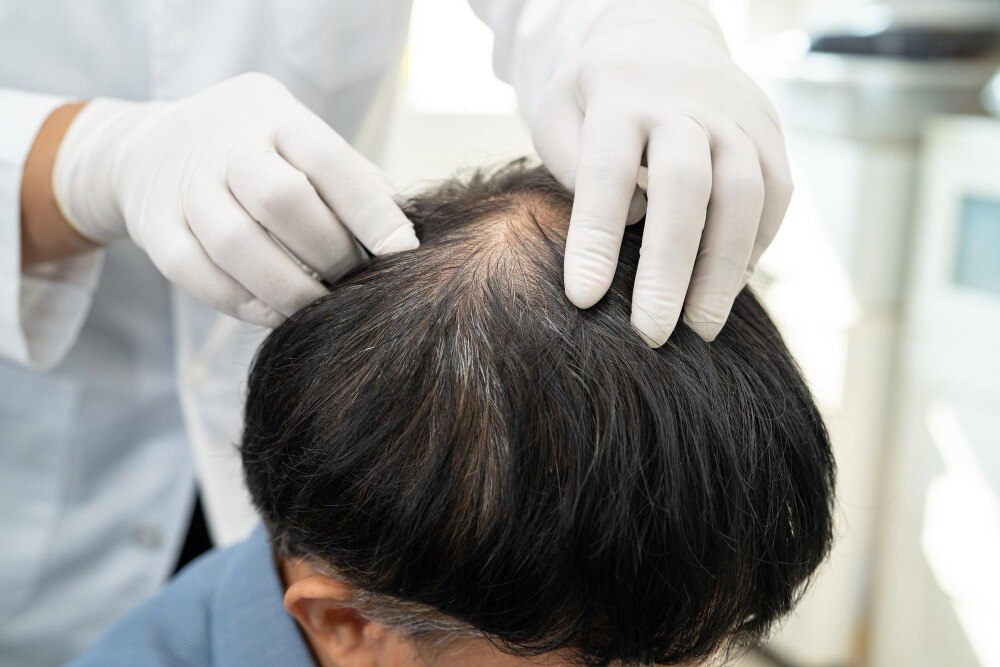
During a hair-pull test, the clinician gently holds a group of hairs near the scalp and checks how many release. A scalp examination assesses follicle openings, hair-shaft thickness, miniaturisation, broken hairs, inflammation, scaling and pustules. Missing openings or shiny skin raises concern for scarring.
Pain, burning, tenderness, itching or scale changes the priority from cosmetic restoration to diagnosis. The clinician must distinguish shedding, follicle miniaturisation and hair breakage before recommending a follicle-growth treatment, because growth medication will not repair damaged shafts or treat an inflamed, scarring scalp.
When are blood tests, trichoscopy or a scalp biopsy needed?
No—most people do not need an extensive hair-loss panel. Testing should follow your history and scalp examination, because a fixed panel can find borderline results that do not explain the shedding.
A complete blood count and ferritin are worth considering when diffuse shedding suggests iron deficiency, especially with heavy menstrual bleeding, restrictive eating or fatigue. Check thyroid-stimulating hormone when thyroid disease is possible, particularly with weight change, fatigue or other thyroid symptoms.
Targeted tests depend on the clue:
- Nutritional tests for a restrictive diet, fatigue or signs of deficiency.
- Hormonal tests for irregular periods, new facial hair, acne or other androgen-excess signs.
- Infection tests for pustules, tenderness, heavy scale or drainage.
Trichoscopy, or dermoscopy of the scalp, magnifies follicle openings, shaft diameter, broken hairs and inflammation. It can distinguish miniaturisation, active shedding, breakage and inflammatory disease without a biopsy.
A scalp biopsy becomes important when scarring alopecia, persistent inflammation or an unclear diagnosis is present. A tissue sample can be examined under a microscope, sometimes with a special stain, to identify the disease pattern.
Do not delay it when the scalp looks smooth or shiny: once scarring destroys a follicle, that follicle cannot regrow hair.
How does the diagnosis change the treatment you should consider?
The diagnosis determines whether you correct a trigger, replace a deficiency, suppress inflammation, or support miniaturised follicles. Temporary telogen effluvium often calls for fixing the trigger—such as illness, rapid weight loss or a new medicine—and observing regrowth over the following months.
- Documented iron or nutritional deficiency requires treatment of that deficiency, not an untargeted supplement.
- Pattern hair loss may respond to topical minoxidil. Explain early shedding, scalp irritation, unwanted facial hair and the need for continued use; stopping usually allows the benefit to fade.
- Selected men may consider oral finasteride after discussing sexual and mood-related risks. It must not be used by anyone who is pregnant or may become pregnant because exposure can harm a male fetus.
- Selected women may use spironolactone under clinician supervision. It is unsuitable during pregnancy, and signs such as acne, new facial hair or irregular periods warrant assessment for androgen excess.
- Scalp infection, dermatitis or inflammatory disease needs disease-specific treatment, not a follicle-growth product. Stop painful traction from tight braids, extensions, weaves or ponytails before damage becomes permanent.
- Alopecia areata and scarring disease need prompt immune-directed or anti-inflammatory care; destroyed follicles cannot regrow.
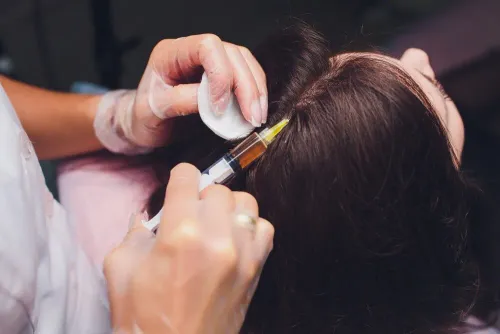
PRP and mesotherapy do not correct thyroid disease, iron deficiency, medication triggers, infection or scarring. PRP hair loss limits include variable protocols and inconsistent evidence, while low-level light devices require repeated use and cannot restore destroyed follicles.
A dermatologist can match treatment to the confirmed cause rather than sell one procedure for every type of loss.
When should you seek specialist assessment before cosmetic treatment?
Book a hair loss specialist promptly if loss is sudden and extensive, progressing quickly, or affecting your eyebrows or body hair. Scalp pain, burning, pustules, heavy scale, or a smooth, shiny scalp are scarring alopecia warning signs; fatigue, weight change, or other systemic symptoms suggest a medical trigger.
| Finding | Concern | What to discuss |
|---|---|---|
| Sudden patches, eyebrow loss or body-hair loss | Alopecia areata | Immune-directed treatment and trichoscopy |
| Pain, burning, pustules, heavy scale or shiny skin | Infection, inflammatory disease or scarring alopecia | Examination and possible biopsy |
| Diffuse loss with fatigue or weight change | Thyroid, iron, nutritional or other systemic trigger | Targeted blood tests |
| Rapid loss after illness, surgery, childbirth, dieting or medication | Telogen effluvium or drug-related shedding | Trigger review before elective procedures |
Delay matters because inflammation can destroy viable follicles, and scarred follicles cannot regrow hair. A proper dermatologist hair assessment should establish the diagnosis before injections or other cosmetic treatment.
Ask these questions:
- What diagnosis does the examination support?
- Which findings justify blood tests, trichoscopy or a scalp biopsy?
- What outcome is realistic, and how long will treatment need to continue?
- For PRP versus mesotherapy, what evidence, protocol and limitation apply to my diagnosis?
RADIANCE CLINIC in Thane is most useful when its dermatologist-led assessment investigates the cause first, then discusses medicines or procedures without presenting PRP or mesotherapy as universal answers.
Frequently asked questions
What does the pattern of hair loss suggest about its cause?
Gradual thinning at the temples or crown, or a widening central part, suggests androgenetic alopecia. Patchy loss, sudden shedding, or scalp inflammation points toward other causes.
Which questions and scalp findings help confirm the likely cause?
A clinician will ask when shedding began, whether illness or stress preceded it, which medicines you take, your diet and menstrual history, and whether hair loss runs in your family. Scalp redness, scaling, pain, broken hairs, scarring, or smooth patches provide additional clues.
When are blood tests, trichoscopy or a scalp biopsy needed?
Blood tests help investigate suspected iron deficiency, thyroid disease, or other medical triggers. Trichoscopy magnifies follicles and shaft changes. A scalp biopsy is reserved for unclear diagnoses or suspected scarring alopecia.
How does the diagnosis change the treatment you should consider?
Androgenetic alopecia may respond to evidence-based hair-growth treatment, while deficiency, thyroid disease, medication effects, infection, or inflammatory disease requires treatment of the underlying cause.
When should you seek specialist assessment before cosmetic treatment?
Seek assessment for sudden or rapid loss, smooth bald patches, pain, redness, scaling, pus, scarring, eyebrow loss, or shedding after a major illness. Diagnosis should come before cosmetic procedures.