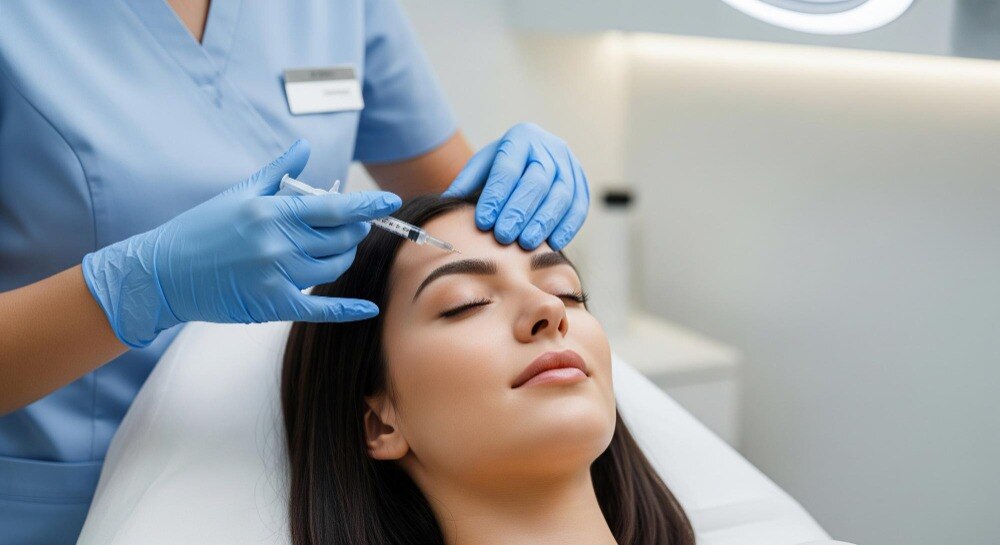
The right treatment depends on whether a line appears during expression or remains etched into relaxed skin, because botulinum toxin reduces muscle activity rather than replacing lost volume or repairing texture. You will be able to match common facial lines with realistic treatment options, prepare for a safe consultation, and follow sensible aftercare without treating precautionary advice as a guarantee.
Key takeaways
- Botox targets dynamic lines caused by repeated muscle movement.
- Static grooves, volume loss and sun damage may need a different treatment.
- Disclose medicines, pregnancy, allergies and neuromuscular conditions before injections.
- Seek urgent help for trouble breathing, swallowing or widespread weakness after treatment.
Which facial lines respond to Botox, and which need another approach?
Botox works best on dynamic lines: creases created by repeated muscle contraction. It reduces the muscle activity causing the line; it does not fill a groove or rebuild sun-damaged skin. Glabellar lines between the eyebrows, horizontal forehead lines and crow’s-feet at the outer eyes are the clearest examples.
| Line or concern | What Botox can do | When another approach fits |
|---|---|---|
| Glabellar lines, forehead lines, crow’s-feet | Soften movement-related creases | Deep lines still visible with the face relaxed may need additional treatment |
| Bunny lines, upper-lip lines, chin dimpling | Reduce selected muscle-driven wrinkles | Treatment needs precise dosing because nearby muscles affect smiling, speech and lip function |
| Neck bands | Relax prominent platysma bands | Skin laxity, heavy jowling or loss of definition needs a different plan |
Static lines remain visible while your face is relaxed. Botox may soften them after movement decreases, but it will not reliably erase etched-in creases.
Botox is the wrong primary tool for loss of facial volume, pigmentation, acne scars, poor skin texture, significant laxity or under-eye hollows. Those concerns may call for skincare, resurfacing, filler, tightening procedures or no procedure, depending on the cause.
A clinician should also reconsider treatment when a line comes from an unassessed brow or eyelid problem. Weakening the wrong muscle can lower the brow, worsen eyelid or brow ptosis, or create asymmetry instead of improving the wrinkle.
How should treatment be planned for your face and expression?
A good plan follows your moving face, not a fixed grid of dots. The clinician should watch you at rest and while you raise your brows, frown, squint, smile, wrinkle your nose, purse your lips and contract your chin.
| Assessment | What the clinician looks for | Why it changes the plan |
|---|---|---|
| Resting anatomy | Brow height, eyelid or brow asymmetry, eyelid hooding and existing ptosis | Weakening the frontalis can lower the brow or make asymmetry more noticeable |
| Muscle action | Strength, bulk and the muscles creating each line | Injection sites and dose must match your contraction pattern |
| Expression goal | Whether you want softened lines with movement or a more immobile result | Too much weakening can produce a flat, heavy or unfamiliar expression |
| Facial proportions | Forehead height, brow shape, sex-related muscle differences and balance between opposing muscles | The same injection pattern does not suit every face |
The clinician may assess the glabella, forehead and lateral canthal lines, then decide whether smaller muscles also need attention. Bunny lines, upper-lip lines and chin dimpling require careful targeting because nearby muscles affect the nose, smile and speech. Crow’s-feet need a plan that respects eyelid strength and lower-eye anatomy.
Ask which botulinum-toxin preparation is being used. Its units are product-specific biological units, so do not compare a quoted number directly with another brand’s units. Tell the clinician about pregnancy, planned pregnancy, breastfeeding, neuromuscular disorders, eyelid infection or previous toxin allergy before a plan is chosen.
What should you disclose and ask before injections?
Before you consent, disclose every condition, medicine and prior reaction that could change the risk. Do not proceed with an infection at the planned injection site or a previous serious hypersensitivity reaction to a botulinum-toxin product.
Tell the clinician about:
- Pregnancy, planned pregnancy and breastfeeding. Human safety data are inadequate, so elective treatment is commonly deferred.
- Myasthenia gravis, Lambert–Eaton syndrome, amyotrophic lateral sclerosis, or another neuromuscular-transmission disorder.
- Blood-thinning medicines, including warfarin, apixaban, rivaroxaban, aspirin or clopidogrel. These can increase bruising; do not stop a prescribed drug without instructions from its prescriber.
- Recent antibiotics, muscle relaxants, or another botulinum-toxin treatment, including its date and dose.
Ask these questions before accepting the plan:
| Topic | What to confirm | Why it matters |
|---|---|---|
| Product | Botulinum toxin brand and lot number, expiry date, and preparation used | Units are product-specific and cannot be directly converted between brands |
| Dose | Number of units, injection points, and intended movement | Dose depends on the preparation, muscle bulk, facial proportions and your goal |
| Safety | Injector’s qualifications, sterile process, emergency arrangements and contact for new symptoms | You need a clear response plan if weakness, an allergic reaction or another complication develops |
| Follow-up | Review timing and the minimum interval before repeat treatment | Cosmetic treatments should not ordinarily be repeated more often than every three months |
Read the consent form before injections, not while the needle is prepared.
What happens after treatment, and when should you seek help?
Results usually begin within 1 to 3 days, reach their full effect by about 10 to 14 days, and last roughly 3 to 4 months. Injection-site tenderness, headache, bruising and localized swelling are common.
Bruising is more likely with aspirin, clopidogrel, warfarin or another anticoagulant; never stop a prescribed medicine without instructions from the prescribing clinician. Eyelid ptosis or brow ptosis can develop from toxin diffusion or an imbalance between weakened and untreated muscles. Contact your injector if either affects your vision or facial symmetry.
Botox aftercare is straightforward:
- Do not rub or massage the injection sites.
- Avoid strenuous facial manipulation for the rest of the day.
- Normal posture and routine activity do not need rigid restrictions, and these precautions cannot guarantee that complications will not occur.
Seek urgent medical assessment rather than waiting for a routine cosmetic review if symptoms begin hours to weeks after injection:
- Generalized weakness
- Double vision
- Difficulty swallowing
- Speech changes
- Breathing difficulty
These symptoms can indicate unintended spread of the toxin effect. Call emergency services for breathing difficulty or rapidly worsening swallowing problems.
How do you choose a clinic and a treatment plan you can assess?
Compare the injector’s reasoning, not just before-and-after photographs. Ask for injector qualifications, registration, experience with facial anatomy, the product’s name and batch details, and a written plan showing muscles, dose, cost, review timing, and alternatives.
| Option | What to assess | When it fits |
|---|---|---|
| Botox | The injector examines brow and eyelid position, muscle strength, asymmetry, and movement rather than using a fixed grid. | Dynamic lines caused by muscle activity, with a clear movement goal. |
| Another procedure | The clinician explains why toxin will not correct the main concern, such as etched lines, volume loss, laxity, pigmentation, or scars. | Skin, volume, or structural change matters more than muscle relaxation. |
| No procedure | The consultation includes observation, skincare, sun protection, or simply waiting without pressure to book. | The expected improvement is small, the risk is unacceptable, or your goal is unclear. |
A natural result needs a defined limit: which movements will remain, what change is realistic, and how asymmetry will be handled. Ask whether the clinic photographs your resting face and expressions so the result can be assessed rather than judged from memory.
Check emergency arrangements before paying. You need a named clinician to contact, a prompt review pathway, and clear instructions for unexpected weakness, marked swelling, breathing or swallowing difficulty, or vision changes. A consultation at RADIANCE CLINIC in Thane should meet those same standards.
Frequently asked questions
Which facial lines respond to Botox?
Botox works best for dynamic glabellar lines between the eyebrows, horizontal forehead lines and crow’s-feet at the outer eyes. It does not fill a groove or repair sun-damaged skin, so static lines, volume loss and poor skin texture may need another approach.
How should Botox treatment be planned for your face and expression?
A clinician should assess your facial movement, brow position, existing asymmetry and how you want your expressions to look. Discuss whether you want movement preserved, because treating one area can affect nearby brow or eyelid position.
What should you disclose before Botox injections?
Tell the clinician about medicines and supplements, allergies, pregnancy or breastfeeding, previous botulinum toxin treatments, neuromuscular conditions, swallowing or breathing problems, and infection at the planned injection site. Ask who will inject, which product will be used and what result is realistic.
What happens after Botox, and when should you seek help?
Follow the clinic’s aftercare instructions and monitor the treated areas as the effect develops. Seek urgent medical help for trouble breathing or swallowing, widespread weakness, severe allergic symptoms or significant vision changes after treatment.
How do you choose a clinic and assess its treatment plan?
Choose a clinic that provides a consultation, identifies the muscles and lines being treated, records the product and batch details, explains risks and alternatives, and gives clear follow-up instructions. Avoid plans based only on a fixed number of units without examining your face.