A thyroid nodule needs a confirmed diagnosis before anyone can decide whether ablation is sensible. By the end, you will know which tests establish suitability, how the available ablation methods differ, what the procedure feels like, and when surgery or another treatment is safer.
Key takeaways
- Confirm benign status with ultrasound-guided biopsy before considering ablation.
- Choose radiofrequency, microwave, laser, or ethanol based on nodule characteristics.
- Ask how the team will protect the recurrent laryngeal nerve and nearby structures.
- Plan ultrasound follow-up to check shrinkage, thyroid function, and possible regrowth.
What a thyroid nodule diagnosis must establish first
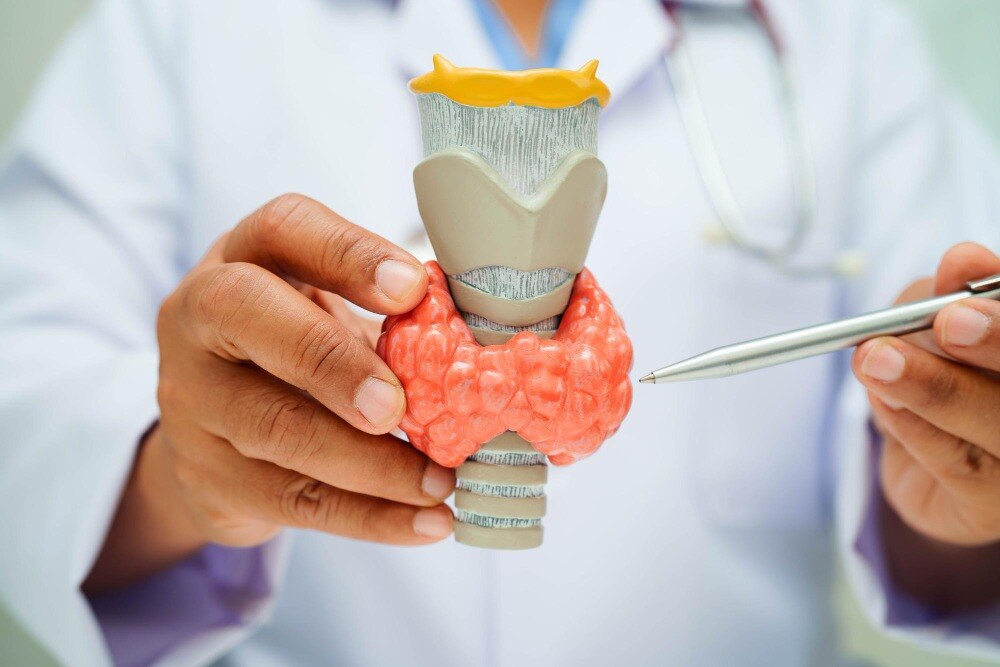
A thyroid nodule is a discrete lump within the thyroid gland, found on examination or imaging. Most are noncancerous, but ultrasound appearance alone cannot prove that a nodule is safe. The diagnosis must classify it as a benign thyroid nodule, a suspicious thyroid nodule, or confirmed thyroid cancer before ablation is considered.
Doctors use:
- Thyroid ultrasound to record whether the nodule is solid, cystic, irregular, calcified, taller-than-wide, or associated with abnormal lymph nodes. The TI-RADS category estimates cancer risk and determines whether biopsy is needed.
- Fine-needle aspiration, or sometimes core-needle biopsy, to examine cells or tissue. A clearly benign result supports surveillance or ablation when symptoms justify treatment; indeterminate or suspicious results need further assessment.
- Thyroid-function tests, including TSH and free T4, to identify a hyperfunctioning nodule and guide treatment.
- Earlier ultrasound scans to measure growth, because size change can alter the decision even when the initial result was reassuring.
A benign result does not make ablation automatic: pressure, swallowing difficulty, neck discomfort, or a visible bulge usually provides the reason to treat. A suspicious ultrasound pattern, indeterminate cytology, concerning lymph nodes, or atypical growth calls for repeat biopsy or surgery instead.
Confirmed thyroid cancer usually needs surgery; thermal ablation is reserved for selected recurrent disease or patients who cannot or will not undergo surgery.
Which test results make ablation a reasonable option
Ablation becomes reasonable when thyroid ultrasound and TI-RADS findings support a benign nodule, biopsy confirms that assessment, and the nodule causes pressure, swallowing difficulty, neck enlargement, or cosmetic concern. A solid or predominantly solid nodule usually needs two benign fine-needle aspiration results, or two benign core-biopsy results.
A core biopsy provides thyroid nodule biopsy confirmation when cytology is inadequate or discordant with the ultrasound appearance.
| Result | Ablation decision | Why |
|---|---|---|
| Benign solid nodule, symptoms or visible growth | Consider ablation | It treats the target while preserving most functioning thyroid tissue |
| Pure or predominantly cystic benign nodule | Consider ethanol ablation first | Ethanol suits fluid-filled lesions and is usually simpler than thermal ablation |
| Recurrent cyst after aspiration or ethanol, with a substantial solid component | Consider thermal ablation | The solid tissue needs direct energy treatment |
| Toxic or autonomously functioning nodule | Individual specialist assessment | Radioactive iodine and surgery remain established options; hormone tests must be monitored |
| Indeterminate biopsy, suspicious TI-RADS features, or concerning lymph nodes | Defer ablation | The diagnosis is not secure enough |
| Confirmed primary thyroid cancer | Usually defer | Surgery remains standard treatment for most clinically significant cancers |
| Severe compression requiring immediate relief | Defer and assess surgery | Ablation may not relieve an urgent airway or swallowing problem |
Do not proceed while cancer remains suspected or biopsy results conflict. Defer treatment for extensive cystic disease unsuitable for ethanol, rapid unexplained growth, or a nodule whose size and position make complete treatment unsafe. A toxic nodule also needs thyroid-function tests before and after treatment; normal hormone levels are not guaranteed immediately.
Radiofrequency, microwave, laser, or ethanol: which method fits?
The key split is between thermal methods for solid tissue and ethanol for fluid-filled cysts. All require ultrasound guidance, and none removes a nodule immediately; treated tissue shrinks over months while some visible tissue remains.
| Option | Energy source | Best fit and usual sessions | Expected result |
|---|---|---|---|
| Radiofrequency ablation | Alternating electrical current creates heat through an electrode. | Solid or predominantly solid benign nodules; usually one session, with repeat treatment if residual viable tissue remains. | About 50–80% volume reduction over 6–12 months, with further shrinkage possible. |
| Microwave ablation | Electromagnetic waves heat tissue rapidly. | Solid nodules and solid components that remain after cyst drainage; commonly one session, sometimes staged for a large lesion. | Gradual shrinkage comparable to other thermal methods, but the final reduction depends on nodule size and treated volume. |
| Laser ablation | Laser light delivered through thin optical fibres becomes heat. | Solid nodules, especially when precise, limited treatment is useful; one session is common, though larger nodules may need another. | Progressive volume reduction over 6–12 months rather than instant disappearance. |
| Ethanol ablation thyroid cyst | Injected alcohol dehydrates cells and causes scarring. | Purely or predominantly cystic nodules, often after aspiration; usually one session, with repeat injection if fluid returns. | Rapid fluid reduction, but recurrence is more likely when a substantial solid component persists. |
For a simple cyst, ethanol is often the first minimally invasive choice because it avoids thermal energy and is generally less costly. Choose thermal ablation when solid tissue remains, the cyst repeatedly returns, or ethanol alone is unsuitable.
What happens during ablation and how nearby structures are protected
You remain awake while the operator numbs the skin and deeper tissues with a local anaesthetic. A thin electrode enters through a small puncture, and ultrasound guidance keeps its tip visible throughout treatment. You may feel pressure, warmth, or brief discomfort; tell the operator immediately if you feel sharp pain, coughing, or voice change.
Protection relies on controlled needle placement and small treatment zones:
- Recurrent laryngeal nerve: The operator uses a trans-isthmic approach and keeps the active electrode tip away from the tracheoesophageal groove. The moving-shot technique treats small portions rather than heating the whole nodule at once.
- Vagus nerve: Continuous ultrasound shows the carotid sheath and helps the operator avoid advancing the needle through this lateral compartment.
- Trachea and oesophagus: The electrode follows a planned path, with ultrasound monitoring of the nodule’s margins. Hydrodissection can inject sterile fluid between the nodule and a nearby structure, creating a temporary safety buffer.
- Skin: The operator avoids activating the electrode near the superficial capsule and monitors the treatment zone. Cooling or hydrodissection adds protection when the nodule lies close to the skin.
- Parathyroid glands: Their expected position and the tissue planes around the thyroid are assessed before treatment; the electrode is kept away from visible glands.
- Temperature monitoring: The team may use it near critical anatomy to stop or redirect energy before excessive heating occurs.
These measures reduce risk, not eliminate it. Bleeding, burn, infection, temporary voice change, and rare permanent nerve injury remain possible; report worsening neck swelling or any voice or breathing change promptly.
Recovery, thyroid function, regrowth, and the follow-up decision
Most people go home the same day and have neck tenderness, swelling, or bruising for a few days. Avoid strenuous activity until discomfort settles, and contact the centre urgently for worsening swelling, breathing difficulty, fever, or a persistent voice change.
Success means symptom improvement and measured thyroid nodule volume reduction, not disappearance. Radiofrequency, laser, and microwave ablation commonly reduce volume by about 50–80% within 6–12 months; residual tissue remains visible. A follow-up ultrasound at about 1, 6, and 12 months, then periodically, checks the treated volume and detects nodule regrowth.
| Measure | What to expect | Why it matters |
|---|---|---|
| Thyroid function tests | Usually preserved; temporary changes can occur | Toxic nodules need biochemical monitoring because normal hormone levels are not immediate or guaranteed |
| Follow-up ultrasound | The nodule shrinks gradually, rather than vanishing | A smaller nodule confirms response but not permanent eradication |
| Symptoms and examination | Pressure, swallowing difficulty, or visible bulging should improve | Persistent symptoms can indicate incomplete treatment or another cause |
Before choosing a centre, ask:
- Who performs the procedure, and how many thyroid ablations do they perform?
- Will the operator use continuous ultrasound guidance, a trans-isthmic route, and moving-shot technique?
- What volume-reduction target and imaging schedule will be documented?
- How will thyroid function tests be monitored, especially for a toxic nodule?
- What is the plan if nodule regrowth occurs or repeat ablation is needed?
Whether you consult RADIANCE CLINIC or another centre, insist on a named follow-up clinician and written results after every assessment.
Frequently asked questions
What must a thyroid nodule diagnosis establish before ablation?
It must classify the lump as benign, suspicious, or confirmed thyroid cancer. Ultrasound appearance alone cannot prove that a nodule is safe.
Which test results make thyroid nodule ablation reasonable?
A benign result from ultrasound-guided fine-needle aspiration or core-needle biopsy, together with ultrasound findings and symptoms, supports consideration of ablation. The medical team must also assess thyroid function and the nodule’s size, location, and composition.
How do radiofrequency, microwave, laser, and ethanol ablation differ?
Radiofrequency, microwave, and laser methods use heat to destroy nodule tissue. Ethanol ablation uses injected alcohol and is particularly suited to selected cystic or predominantly cystic nodules. The best option depends on the nodule’s contents, position, and treatment goals.
What happens during thyroid nodule ablation?
The clinician uses ultrasound guidance to place a treatment needle or electrode into the nodule, then applies energy or ethanol in controlled amounts. Local anaesthetic and techniques such as hydrodissection help separate and protect the recurrent laryngeal nerve, trachea, oesophagus, and skin.
What should you expect after thyroid nodule ablation?
Most patients return to routine activities quickly, while tenderness, swelling, or temporary voice changes require monitoring. Follow-up ultrasound measures shrinkage, thyroid blood tests assess function, and later scans check for regrowth.