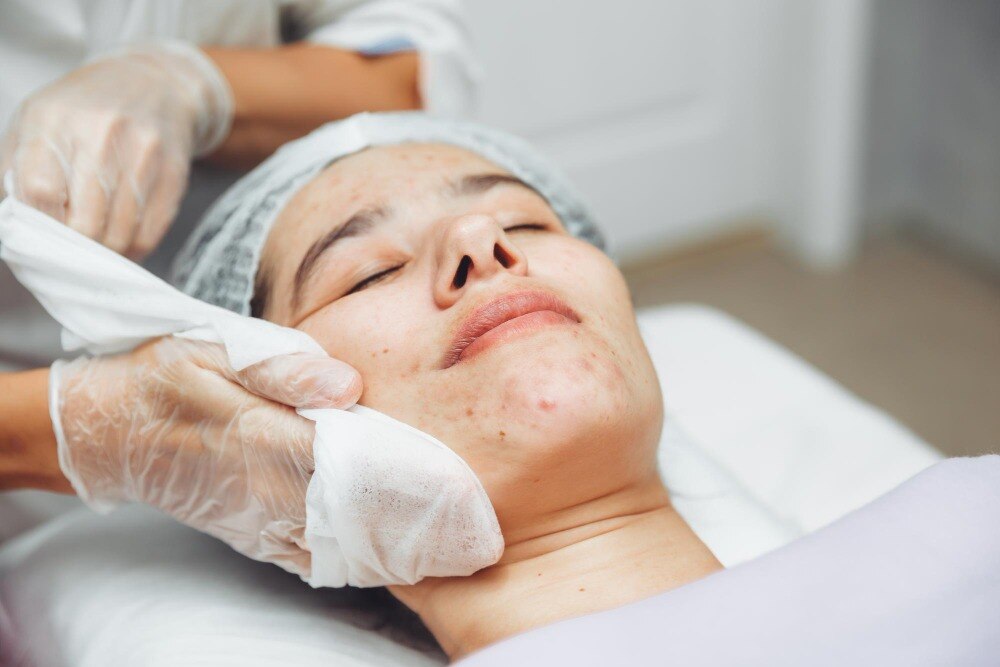
Blackheads, itchy uniform bumps, tender jawline lumps and dark marks do not call for the same treatment. By identifying the dominant lesion and accounting for your skin’s oiliness, sensitivity, pigmentation and medical circumstances, you can choose a safer starting plan and recognise when self-treatment is no longer appropriate.
Key takeaways
- Use pore-unclogging treatment for blackheads and whiteheads.
- Choose anti-inflammatory treatment for red, sore acne bumps.
- Adjust treatment to dryness, sensitivity, oiliness, or irritation.
- Reassess after consistent use before changing your plan.
Start with the breakout pattern you can see
Blackheads and whiteheads point to comedonal acne, while red, sore bumps suggest inflammation; that visual difference determines whether treatment must unclog pores, reduce bacteria and inflammation, or address another trigger.
| Pattern | What you see | Why it changes treatment |
|---|---|---|
| Comedonal acne | Blackheads are open dark plugs; whiteheads are closed, flesh-coloured bumps. | Topical retinoids target clogged pores. Salicylic acid can help loosen surface oil. |
| Inflammatory papules and pustules | Papules are tender red bumps; pustules contain visible pus. | Benzoyl peroxide reduces inflammation and limits antibiotic resistance. |
| Nodules | Large, firm, painful lumps sit deep under the skin. | Over-the-counter products often fall short; early dermatology care reduces scarring risk. |
| Cysts | Deep, tender, fluid-filled-feeling swellings may recur in the same area. | Do not squeeze them. A clinician may discuss injections, prescription treatment or isotretinoin. |
| Hormonal acne | Flares recur around menstruation or cluster along the chin, jawline and lower face. | A clinician may assess hormonal treatment, including spironolactone or a combined oral contraceptive. |
| Fungal folliculitis | Small, uniform, itchy bumps appear on the forehead, chest or back, usually without comedones. | Antifungal treatment may work better than repeatedly increasing acne antibiotics. |
| Acne-like eruptions | A sudden, similar-looking rash follows a new medicine, steroid, greasy product or friction. | Remove or change the trigger as well as treating the bumps. |
Do not pick or attempt unsterile extraction: inflammation, scarring and post-inflammatory dark marks can follow. Professional extraction suits selected blackheads and whiteheads, not deep nodules, and does not prevent new lesions.
Match the treatment to your skin’s condition
The same acne active can help one face and leave another inflamed, cracked or marked. Match strength, frequency and supporting skincare to your barrier before judging whether a treatment works.
- Oily skin: Use a non-comedogenic moisturiser and introduce adapalene or benzoyl peroxide gradually. Reducing oil alone will not clear clogged pores.
- Dry skin: Avoid harsh cleansers and frequent salicylic acid. Choose a moisturising base, apply a thin layer of active treatment, and stop if cracking develops.
- Sensitive skin: Start one active at a time, twice weekly, rather than layering several irritants. Patch-test products and avoid scrubs, fragrance and alcohol-heavy formulas.
- Dehydrated skin: A dehydrated skin acne treatment plan needs a gentle cleanser, moisturiser and sunscreen before stronger actives. Water loss can make normal acne products sting.
- Darker skin tones: Irritation can trigger post-inflammatory hyperpigmentation. Use lower frequency, moisturise consistently and ask a dermatologist about azelaic acid if marks persist.
- Eczema-prone skin: Do not apply acne actives over an eczema flare or broken skin. Calm the eczema and obtain medical guidance before restarting treatment.
For pregnancy acne, check pregnancy status or plans before starting medication. Avoid topical retinoids and oral tetracyclines; benzoyl peroxide or azelaic acid are commonly considered options after medical advice. Deep nodules, scarring or sudden uniform bumps after a new medicine need dermatology assessment, not stronger self-treatment.
Choose an option that targets the dominant lesion
Blackheads and whiteheads need pore-clearing treatment, not simply an oil-reducing product. Tender red papules and pus-filled pustules need anti-inflammatory or antibacterial treatment. Deep nodules and cysts require medical assessment because delaying effective treatment increases scarring risk.
| Pattern | Best-fit option | What it treats |
|---|---|---|
| Comedones | Topical retinoids; salicylic acid | Retinoids prevent clogged pores and clear blackheads and whiteheads. Salicylic acid loosens buildup and suits milder congestion. |
| Papules and pustules | Benzoyl peroxide; adapalene benzoyl peroxide | Benzoyl peroxide reduces acne-causing bacteria and inflammation. The combination also prevents new comedones. |
| Sensitive skin or dark marks after spots | Azelaic acid | Azelaic acid topical reduces mild inflammatory acne, unclogs pores and helps fade post-inflammatory pigmentation. |
| Persistent inflamed acne | Topical antibiotics or oral antibiotics | Topical antibiotics treat surface bacterial inflammation; oral antibiotics reach widespread inflammatory acne. Use either with benzoyl peroxide or other topical therapy, never alone. |
| Jawline or menstrual flares | Hormonal treatment, including spironolactone | Hormonal treatment reduces androgen-driven oil production in suitable patients after medical screening. |
| Nodules, cysts or scarring acne | Isotretinoin | Isotretinoin targets severe acne through oil production, clogged pores and inflammation; a dermatologist must supervise it. |
Uniform itchy bumps may indicate fungal folliculitis rather than acne, so acne antibiotics can worsen the wrong diagnosis. Pregnancy or plans to conceive change the choice: avoid topical retinoids, oral tetracyclines and isotretinoin; ask a clinician whether benzoyl peroxide or azelaic acid is appropriate.
Teams may use a combination for mixed lesions, then continue maintenance to prevent comedones returning.
Give the plan enough time, then reassess it
Give an effective acne treatment 8 to 12 weeks before deciding it has failed. The acne treatment timeline is slow because new clogged pores already forming beneath the skin must surface before improvement is visible.
Irritation during the first few weeks does not prove the treatment is wrong; reduce frequency or use a gentler moisturiser rather than adding another active.
- Weeks 0–4: use the treatment consistently and monitor burning, peeling or worsening inflammation.
- Weeks 4–8: look for fewer new lesions, less tenderness and shorter-lasting breakouts.
- By week 12: continue if improvement is clear; reassess the diagnosis and plan if acne has not meaningfully improved.
See a dermatologist instead of continuing over-the-counter acne care when acne worsens rapidly, forms nodules or cysts, leaves acne scars, or causes persistent post-inflammatory hyperpigmentation. Seek assessment for significant menstrual irregularity, excess facial hair, or uniform itchy bumps, which can indicate a different or hormonal condition.
Pregnancy or plans to become pregnant also require a medication review.
Once active acne settles, maintenance treatment can prevent new comedones. It will not remove acne scars, and irritation can prolong red marks or brown marks, especially when it triggers post-inflammatory hyperpigmentation. Use broad-spectrum sunscreen daily and review maintenance treatment if its irritation outweighs its benefit.
Know when procedures can help—and when they can harm
A tender, deep nodule may shrink quickly after an intralesional corticosteroid injection, while a blackhead or whitehead may benefit from careful comedone extraction. Neither option prevents new lesions, and injection is unsuitable for routine treatment.
- Comedone extraction: useful for selected open or closed comedones; squeezing at home increases inflammation, scarring and post-inflammatory hyperpigmentation.
- Intralesional corticosteroid injection: a targeted rescue for one large, painful nodule; incorrect or excessive injection can cause skin atrophy or pigment change.
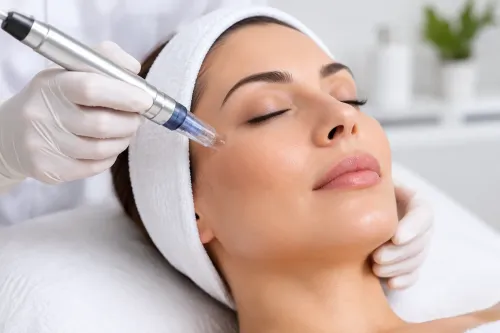
- Chemical peels for acne: salicylic acid peel can suit oily, clogged pores, while a glycolic acid peel targets surface buildup and uneven tone. They do not replace a preventive regimen and can worsen irritation or dark marks if the peel strength is excessive.
Before acne procedures, ask the dermatologist which lesions are suitable, what peel strength is planned, and whether your current retinoid, benzoyl peroxide or exfoliant needs pausing. Discuss preparation, expected downtime, infection precautions and sun protection; skipping sunscreen after treatment raises the risk of prolonged discoloration.
If you have eczema, very sensitive skin or a history of post-inflammatory hyperpigmentation, ask whether a gentler plan is safer than an aggressive procedure. RADIANCE CLINIC can help you make that decision through a dermatologist-led assessment rather than treating every bump with extraction or a peel. Avoid procedures on actively irritated, sunburned or infected skin.
Frequently asked questions
How can you identify your acne breakout pattern?
Blackheads and whiteheads indicate comedonal acne, while red, sore bumps indicate inflammatory acne.
How should you match acne treatment to your skin’s condition?
Account for dryness, sensitivity, oiliness, and irritation before choosing products or treatment strength.
How long should you give an acne treatment before reassessing it?
Use the plan consistently for enough time to judge its effect, then reassess rather than changing products repeatedly.
When can acne procedures help or cause harm?
Procedures can help selected acne concerns, but treating active inflammation or irritated skin too aggressively can worsen irritation and marks.