A chemical peel is not one universal facial treatment. Different peeling agents work at different depths and may be selected for concerns ranging from acne and uneven pigmentation to rough texture and signs of photoageing.
This is why choosing a Chemical Peel in Thane should begin with identifying the skin concern rather than simply selecting the strongest available peel.
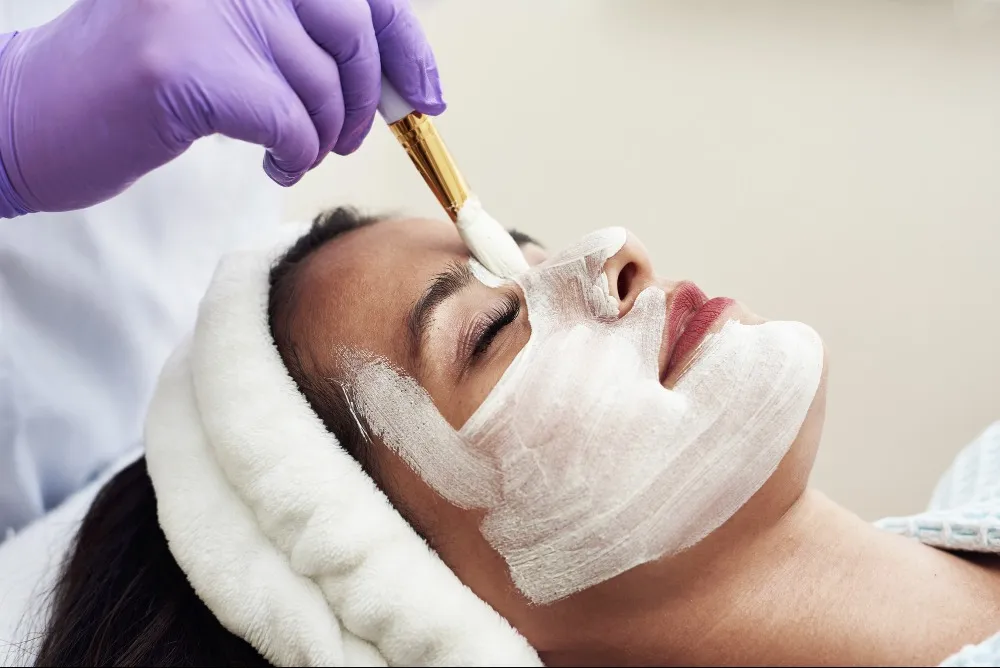
During treatment, a controlled chemical solution is applied to the skin to produce a planned degree of exfoliation. As the skin recovers, improvements in tone or texture may gradually become visible.
What can chemical peels be used for?
Depending on the peeling agent and patient, they may be considered for concerns including:
- Certain forms of acne
- Post-acne pigmentation
- Uneven skin tone
- Superficial pigmentation
- Dull or rough texture
- Selected signs of sun damage
- Fine superficial lines
The appropriate peel depends on the diagnosis. Pigmentation, for example, can have several causes, and an unsuitable treatment may irritate the skin rather than improve it.
Superficial versus deeper peels
Superficial peels generally affect the upper layers of skin and often involve less downtime. Medium or deeper treatments penetrate further and can produce more substantial peeling and recovery requirements.
A stronger peel is not automatically a better peel.
Skin tone, sensitivity, previous reactions, medications, active infections and the risk of pigmentation changes all influence selection.
Questions worth asking before proceeding
Patients should understand what peeling agent is being used, what concern it is intended to address and how much redness, flaking or downtime to expect.
It is also useful to ask:
- How should the skin be prepared?
- Which skincare products should temporarily be stopped?
- How important is sun protection afterwards?
- When can normal skincare be restarted?
- How many sessions may be considered?
- What side effects should prompt a review?
For patients considering a Chemical Peel in Thane, Maharashtra, Radiance Clinic provides evaluation with Dr Vrushali Sarode, a board-certified dermatologist and cosmetology specialist. Dermatological assessment is particularly useful when pigmentation, acne, sensitivity or previous reactions complicate treatment selection.
Aftercare plays a significant role in the overall experience. Picking peeling skin, introducing strong active products too quickly or neglecting sun protection can increase irritation and pigmentation risk.
A well-planned chemical peel should therefore be viewed as a controlled dermatological procedure with appropriate preparation and aftercare, rather than simply a stronger form of exfoliation.
Keywords