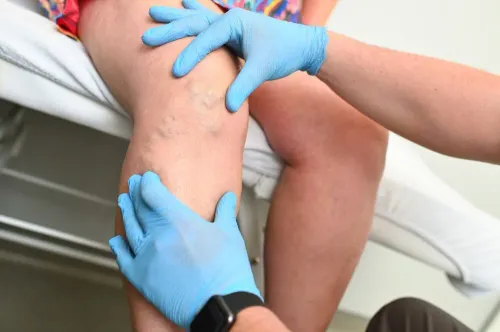
Heavy legs at the end of the day may seem like an ordinary consequence of standing or working for long hours. When heaviness is accompanied by swelling, visible veins, skin changes or recurring discomfort, however, Chronic Venous Insufficiency may be one condition worth investigating.
Healthy leg veins contain valves that help blood travel upward toward the heart. When these valves do not function effectively, blood can pool in the legs and increase pressure within the veins. Over time, this can produce symptoms ranging from mild discomfort to significant skin and tissue problems.
Common signs include:
- Leg heaviness or aching
- Ankle or lower-leg swelling
- Varicose veins
- Itching around affected veins
- Skin discolouration near the ankle
- Dry or irritated skin
- Symptoms that worsen after prolonged standing
- Venous ulcers in more advanced disease
Not everyone with visible veins has severe venous insufficiency, and not every swollen leg is caused by a vein problem. Heart, kidney, lymphatic, medication-related and other conditions can also contribute to swelling. Proper assessment therefore matters.
How is chronic venous insufficiency investigated?
Clinical examination is usually combined with a detailed history. A venous Doppler ultrasound may be recommended to evaluate blood flow and determine whether reflux, obstruction or another venous abnormality is present.
This information helps establish where the problem is occurring and whether treatment is necessary.
What treatment options are available?
Management depends on the severity and cause of venous disease. Measures may include regular walking, weight management where relevant, leg elevation and appropriately prescribed compression therapy.
When significant venous reflux or obstruction is identified, minimally invasive procedures may be considered in selected patients. Treatment should be matched to the actual venous abnormality rather than based solely on the appearance of varicose veins.
For residents of Thane and surrounding areas of Maharashtra, early assessment can be particularly useful when swelling or skin changes have become persistent. At Radiance Clinic, Dr Ashish Sarode, a board-certified vascular and interventional radiologist, evaluates vascular conditions and image-guided treatment possibilities according to individual findings.
When should leg symptoms receive quicker attention?
Sudden swelling of one leg, significant pain, redness, warmth, breathlessness or chest discomfort should not simply be assumed to be chronic venous insufficiency. These symptoms can require urgent assessment for conditions such as deep vein thrombosis or pulmonary embolism.
Chronic venous disease often develops gradually, which makes its early symptoms easy to normalise. Recognising persistent changes and identifying their actual cause can help patients make informed decisions before complications become more difficult to manage.
Keywords